Carbide vs Ceramic vs Diamond Pocket Sharpener: Which Setup?
Carbide vs ceramic vs diamond pocket sharpener: the right abrasive setup depends on blade type, steel hardness, and target channel. This guide breaks down each material's role, compares pull-through and tapered rod structures, and shows how a 6-in-1 tactical sharpener covers coarse restoration, polishing, serrated edges, and fire-starting in one 30g tool.
Table of Contents
Carbide: Coarse Restoration and When It’s Enough
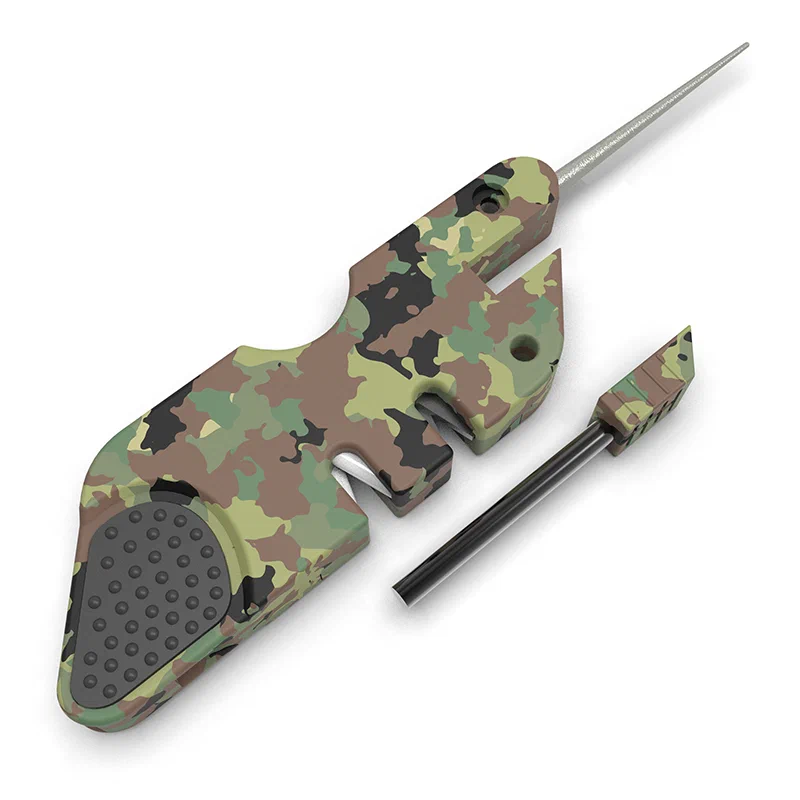
When you evaluate a carbide vs ceramic vs diamond pocket sharpener, carbide is the coarse workhorse. Its tungsten-carbide cutters remove material fast, resetting a blunt or damaged edge in a few strokes. For tactical and outdoor users who need field-expedient repair, this speed matters. The 6-in-1 Camo Survival Knife Sharpener uses a coarse carbide slot precisely for this job: restoring a rolled or chipped blade after heavy use.
Carbide is not a finishing abrasive. It leaves a toothy, aggressive edge that bites into rope, wood, and game. That edge is functional but not refined. Overuse shortens blade life because each pull removes steel. Specify carbide as a first-stage option, not a daily maintenance tool. In a compact 30g unit measuring 4.5" x 1.625" x 0.5", carbide earns its place by handling the worst-case scenarios—dull machetes, neglected camp knives, and emergency repairs where speed beats finesse.
For buyers, carbide’s low cost and high removal rate make it a staple in outdoor sharpeners. Pair it with finer abrasives to avoid customer complaints about excessive steel loss. The key is communicating use order: carbide first, ceramic or diamond second.
Ceramic: Polishing and Edge Refinement
Ceramic abrasives sit at the opposite end of the aggression spectrum. In a carbide vs ceramic vs diamond pocket sharpener comparison, ceramic is the polishing stage. Fine ceramic rods or slots have a much smaller grit size, aligning the edge and removing the scratch pattern left by carbide. The result is a polished, hair-splitting edge when the user follows proper technique.
Achieving a shaving-sharp edge requires consistent angle control and light pressure. Ceramic does not remove enough material to fix a dull blade on its own—it refines an already shaped edge. That is why the 6-in-1 tool sequences carbide first, then ceramic. The fine ceramic slot in this model is fixed into an ABS housing, which protects the rod from impact and keeps the angle stable during pulls. ABS is lightweight and impact-resistant, suitable for a 30g pocket tool that sees outdoor abuse.
Durability of ceramic depends on rod quality and mounting. A well-seated ceramic rod resists chipping and maintains its abrasive surface for hundreds of uses. For product lines targeting campers and tactical users, ceramic adds perceived value because it delivers the “razor edge” customers expect. Specify ceramic after carbide to reduce burr formation and extend edge retention.
Diamond: Serrated Blades, Fishhooks and Hard Steel
Diamond is the most versatile abrasive in the carbide vs ceramic vs diamond pocket sharpener debate. Its hardness handles hard steel (HRC 58+) that quickly dulls carbide or ceramic. More importantly, a tapered diamond rod reaches into serrated blades and fishhooks where flat stones cannot. This is the best abrasive setup for serrated blades and fishhooks because the rod’s conical shape matches the contact angle of each serration.
When sharpening serrated edges, the tapered rod works tooth by tooth. The user inserts the rod into each scallop and follows the original bevel. The diamond grit cuts quickly without altering the serration profile. For fishhooks, the same rod navigates around the barb—avoiding the point—and sharpens the hook’s inner curve. This level of access is impossible with a pull-through slot alone.
Hard steel, including D2, S35VN, and similar alloys, responds well to diamond because the abrasive is harder than the carbide particles in the steel. The trade-off is cost: diamond rods raise unit price. But for tactical sharpeners sold to demanding users, diamond justifies the premium. The 6-in-1 configuration integrates a tapered diamond rod alongside carbide and ceramic, covering serrated edges, fishhooks, darts, and hard-steel knives in one compact tool.
Pull-Through vs Tapered Rod: Structure and Use Case Differences
The pocket sharpener vs pull through sharpener for tactical use decision comes down to structure and user skill. Pull-through sharpeners, like the carbide and ceramic slots in the 6-in-1, offer speed and consistency. The user pulls the blade through a fixed-angle slot, and the abrasive does the work. This is ideal for quick touch-ups in the field, especially for plain-edge knives. The risk is edge consistency: repeated pulls can round the tip or create a slight convexity if the user applies uneven pressure.
Tapered rods, by contrast, are freehand tools. They demand angle control and patience, but they reach serrations, recurves, and fishhooks that pull-through slots cannot. A tapered diamond rod also lets the user sharpen only the damaged section, preserving the rest of the edge. For tactical users who carry serrated blades or gut hooks, this flexibility is non-negotiable.
Pull-Through: Speed and Consistency
Pull-through slots excel at maintenance. They are fast, require little training, and work well for plain edges. In a tactical context, a few pulls on carbide or ceramic restore a working edge without tools or setup. The fixed angle reduces guesswork, but it also limits the sharpener to a single edge geometry.
Tapered Rod: Flexibility and Skill
Tapered rods trade speed for access. They handle serrations, fishhooks, and hard-to-reach areas, but the user must maintain a consistent angle. For buyers, offering both structures in one product—like the 6-in-1—covers the widest range of customer needs. The carbide and ceramic slots handle plain edges, while the diamond rod tackles the rest.
Specifying the Right Combination for Your Product Line
Choosing the right abrasive setup for your product line requires matching materials to target channels and blade types. Start with the blade list: if your customers carry serrated tactical knives, fishhooks, or hard-steel folders, diamond is mandatory. For general outdoor and camping channels, carbide plus ceramic covers most plain-edge needs at a lower cost. A 6-in-1 configuration with all three abrasives plus fire starter and whistle appeals to survival and tactical buyers who want one tool for multiple tasks.
Cost targets also shape the spec. Diamond rods add cost, but they justify a premium price. Carbide and ceramic are inexpensive and can be sourced in high volumes. The 30g weight and 4.5" x 1.625" x 0.5" dimensions keep shipping costs low—important for e-commerce and retail channels. Certifications matter: CE and RoHS compliance opens European and North American markets. Color variants like camo and army green allow you to test demand without changing tooling.
Before committing to a full production run, request samples and run user testing. Ask testers to sharpen serrated blades, fishhooks, and hard-steel knives, then collect feedback on edge quality and ease of use. This validates the abrasive sequence and identifies any need for grit adjustments. A manufacturer with experience in ABS overmolding and abrasive insertion can advise on the most durable, cost-effective combination for your target price point.
See the 6-in-1 Configuration in Detail
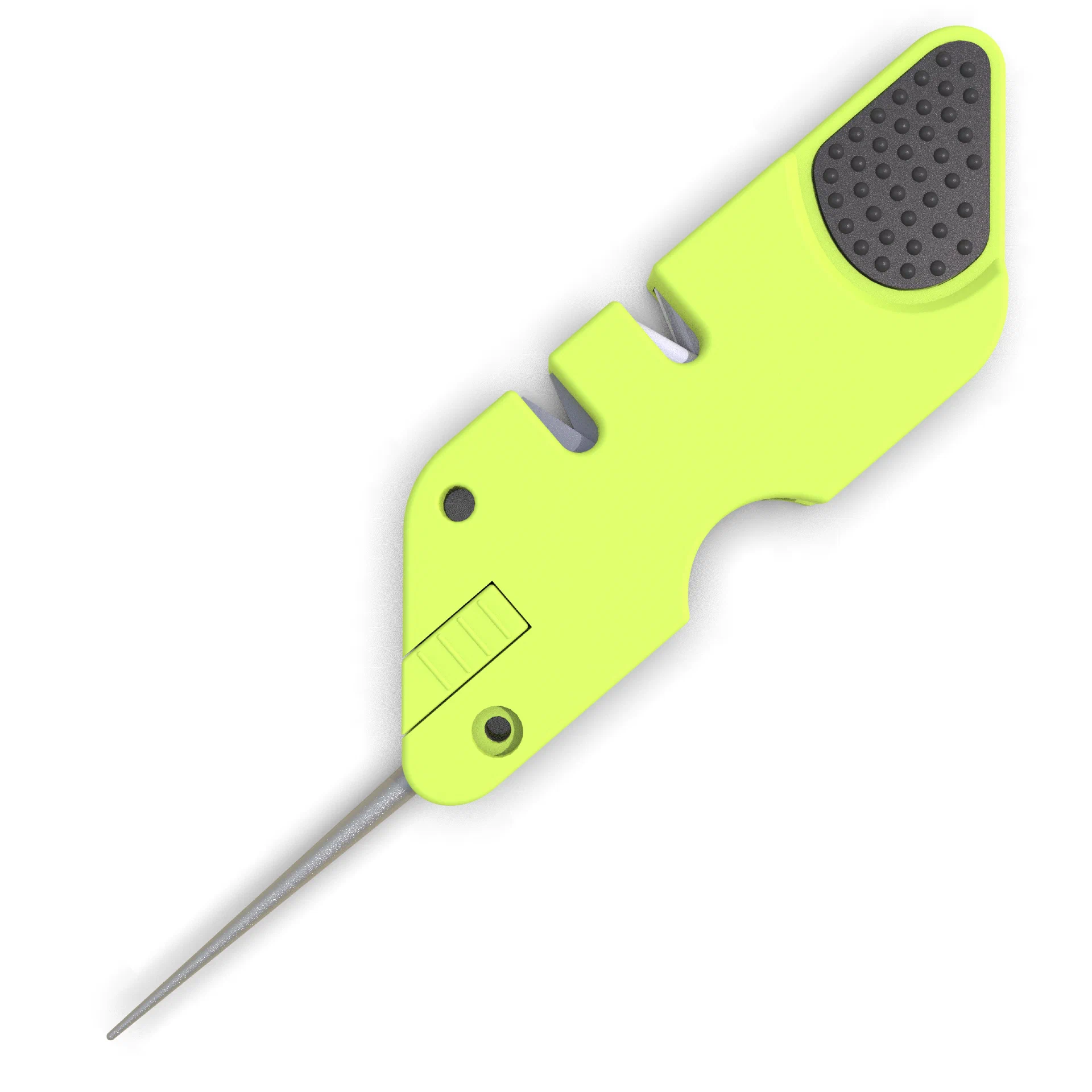
The 6-in-1 Camo Survival Knife Sharpener (model tact-4) packs coarse carbide, fine ceramic, and a tapered diamond rod into a 30g ABS body. It also includes a fire starter, high-decibel whistle, and lanyard hole—making it a complete tactical and outdoor accessory. The army green variant (tact-5) offers a different color option for the same platform.
To get a tailored abrasive recommendation, share your blade list and target channel with our team. We will suggest a configuration, provide samples, and support testing so you can specify the right pocket sharpener for your market. Contact us for a quote and sample request.Recommended Products