Custom Pocket Knife Sharpener Manufacturer in China
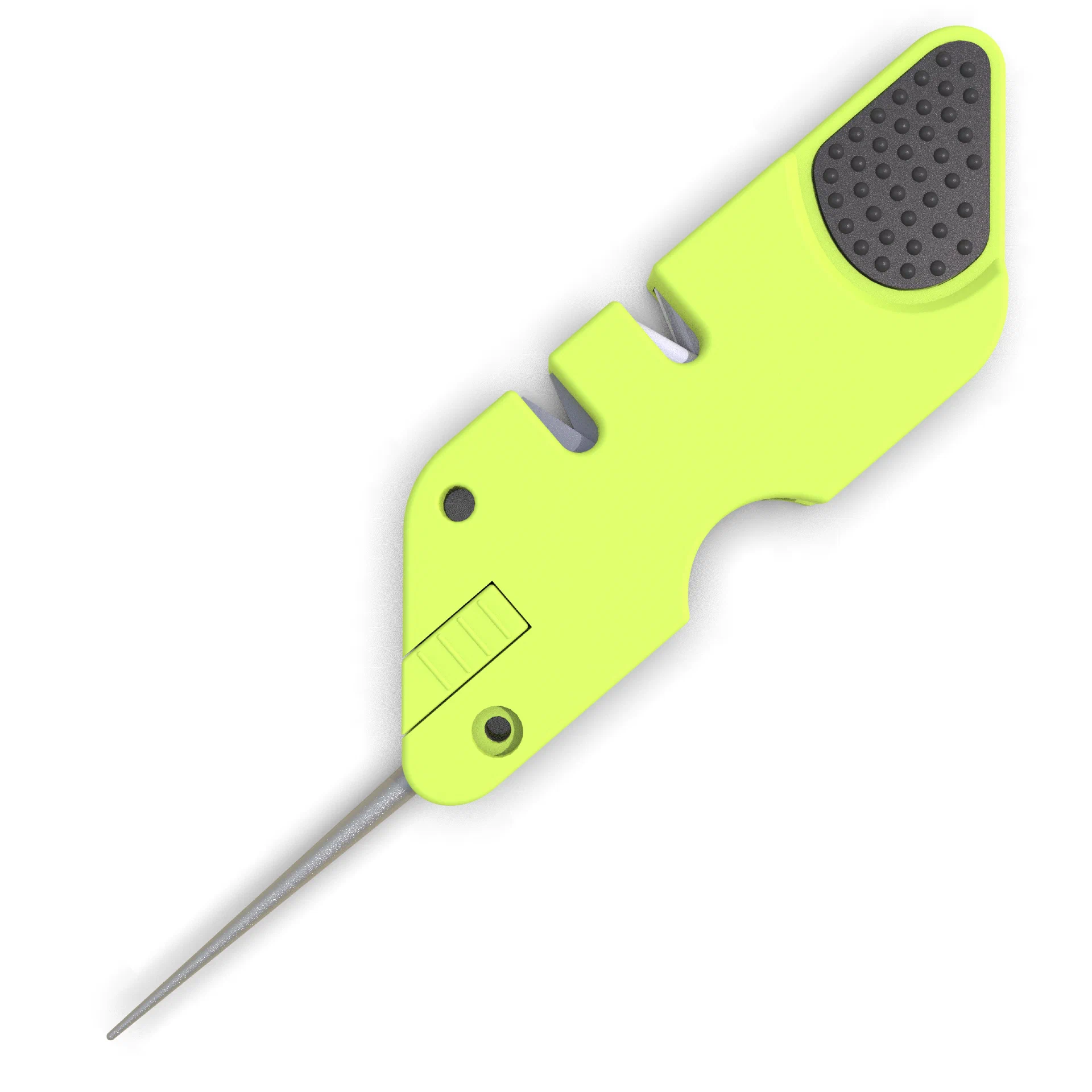
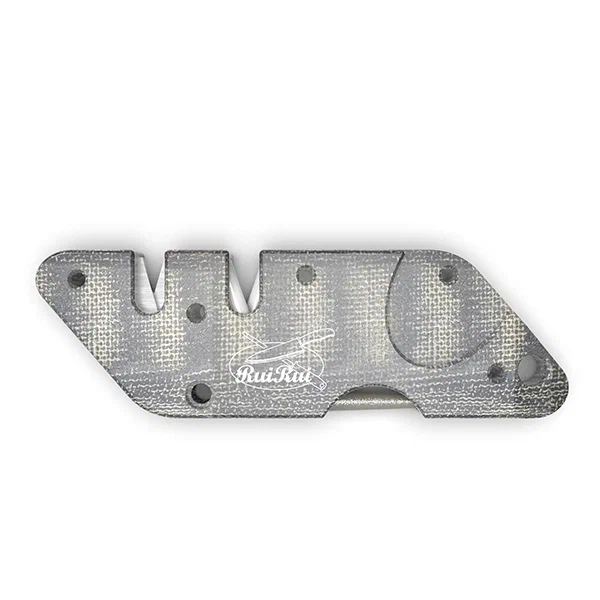
A custom pocket knife sharpener manufacturer in China builds OEM and private label programs on proven hardware: carbide, ceramic and diamond abrasives with an integrated fire starter and whistle. This guide covers mold ownership, camo print testing, MOQ tiers, certification files and sampling timelines for tactical and outdoor buyers.
Table of Contents
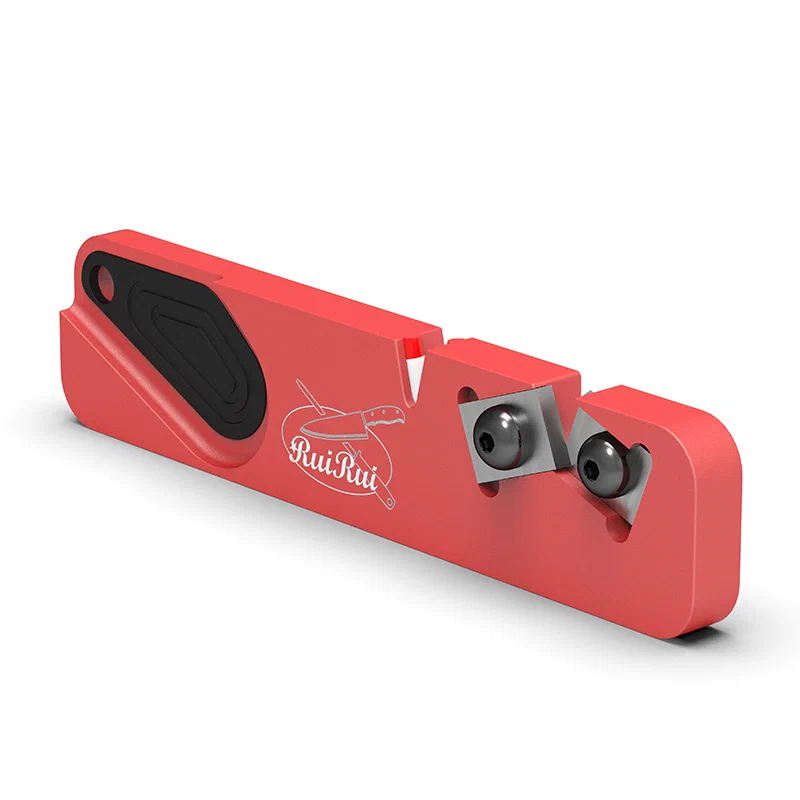
Sourcing a pocket sharpener that carries your brand instead of someone else’s comes down to one question: does the factory control tooling, print and assembly in-house? A custom pocket knife sharpener manufacturer in China that owns all three can move from artwork to a sealed sample in weeks, not quarters. The platform this guide is built around measures 11.4 cm × 4.1 cm × 1.3 cm and weighs 30 g, with an ABS shell housing carbide, ceramic and diamond abrasives plus a fire starter and signal whistle. Because it already carries CE and RoHS documentation, customization starts from a validated base rather than a blank page.
What “Custom” Means at the Factory Level: Mold, Print, Packaging
Buyers use “custom” to mean three very different things, and each carries its own tooling cost and MOQ floor. Sorting out which level you actually need is the fastest way to avoid paying for a new mold when a print change would have done the job.
Mold and structure customization
New tooling applies when you change the shell geometry, the abrasive slot layout, or the compartment that holds the ferrocerium rod. Moving the lanyard hole, widening the ceramic slot, or adding a second whistle chamber all require a revised injection mold. Typical tooling for a two-cavity pocket sharpener mold runs in the low thousands of USD, with 25–35 days for first-shot samples once the 3D file is approved. If your design stays inside the existing envelope, no tooling charge applies.
Print and finish customization
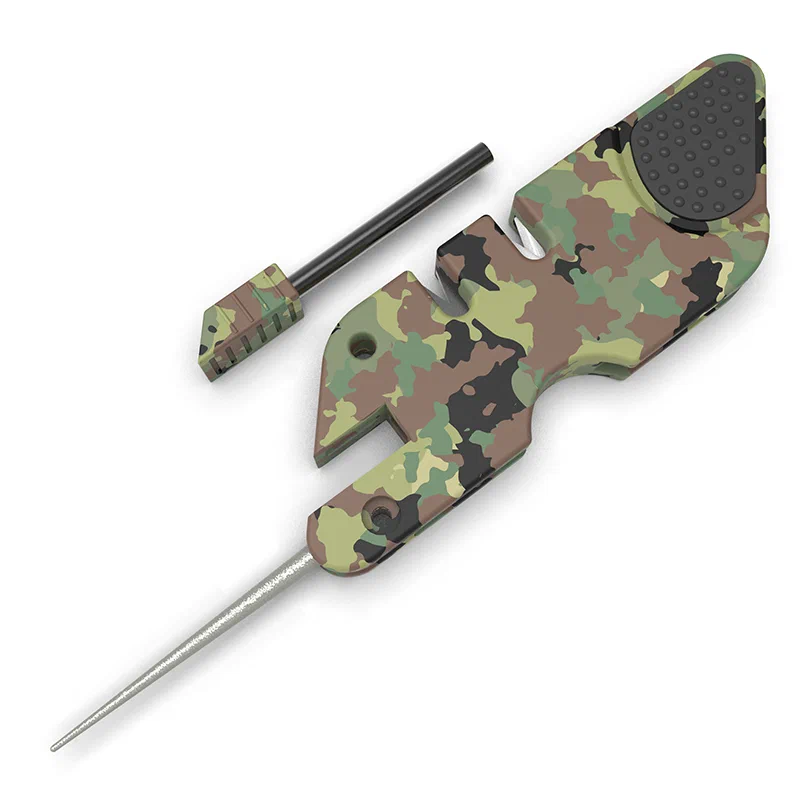
- Camo water-transfer printing: full-wrap patterns, no tooling cost, MOQ from 1,000 pcs per pattern
- Silk-screen logo: 1–3 colors, best for flat side panels, MOQ from 500 pcs
- Laser engraving: permanent marking on ABS, single-color, MOQ from 300 pcs
Packaging customization
Hang cards, blister packs, color boxes and multilingual instruction sheets are quoted per SKU. Blister tooling is the only packaging element with a fixed cost, usually a few hundred USD, and it is reusable across colorways of the same body.
Camo Patterns and Tactical Branding: Options and Constraints
Any private label camo tactical sharpener supplier can show you a pattern book. The differentiator is whether they can hold that pattern consistent across 20,000 units and two production runs six months apart.
Pattern library and proofing
Most factories keep 10–20 stock camo files — woodland, multicam-style, digital, realtree-style, black-and-tan. A custom pattern is possible but needs a print cylinder or transfer film, which adds roughly 7–10 days to sampling and a per-unit cost increase of 3–8% at volumes under 5,000 pcs.
Adhesion testing
Camo on ABS fails in the field for three reasons: salt spray, abrasion against belt clips and pouches, and UV fade. Ask for test data before committing:
- Salt spray, 48 hours, no blistering or edge lift
- Taber abrasion, 500 cycles, pattern retention above 90%
- QUV accelerated aging, 200 hours, ΔE color shift under 3
Tactical channel tolerance and logo limits
Tactical and military-adjacent retailers accept minor batch-to-batch color variation on camo but not on solid colors. Solid black, ranger green and coyote tan are usually held to ΔE ≤ 1.5. Logo placement on this 11.4 cm body realistically fits two zones: the top face (max 35 mm × 12 mm) and the lower side panel (max 25 mm × 8 mm). Anything larger wraps around the ceramic slot and looks broken when the tool is open.
OEM Integration: Fire Starter, Whistle, Lanyard Hole Configuration
This is where an OEM survival sharpener with fire starter and whistle factory earns its margin. Integration looks simple on a spec sheet and causes most field failures when tolerances slip.
Ferro rod and striker
Standard rod diameter is 4–5 mm with a knurled striker nested in the shell. The rod must be removable without tools and must not rattle — a 0.2 mm oversize bore turns a silent tool into a noisy one in a pocket. Ferrocerium composition is typically 70% cerium and 30% iron alloy, striking at roughly 3,000 °C sparks.
Whistle performance
A molded emergency whistle in this body size typically delivers 95–105 dB at one meter. Peak output depends on the air chamber volume and the exit slot width, both of which are set by the mold. If you need 110 dB+, expect a dedicated chamber design and a new tooling cycle.
Lanyard hole and attachment testing
The lanyard hole is sized for 2 mm paracord and small split rings. Pull testing at 15 kg for 60 seconds is a reasonable incoming QC standard. Compatibility with carabiners and belt clips should be validated on the finished assembly, not on a CAD model.
Weight and size impact
Every added feature adds grams. The baseline is 30 g at 11.4 cm × 4.1 cm × 1.3 cm. Adding a longer ferro rod or a metal striker plate can push the finished unit to 34–36 g, which matters if your retail packaging lists weight or if you ship by air freight on volumetric weight.
Sampling, Tooling and Production Timelines
Sampling cycles
- Existing mold, print only: 7–10 days for a pre-production sample
- Existing mold plus new print cylinder: 14–18 days
- New mold: 25–35 days to first shot, plus 5–7 days for a functional sample with fire starter and whistle installed
Tooling cost amortization
Three common structures: buyer pays tooling upfront and owns it; factory amortizes tooling across the first order at a per-unit surcharge; or tooling is waived above a volume threshold, usually 20,000–30,000 pcs. Get ownership in writing — if you paid for the mold, the mold should be listed as your property in the contract, with a clause on transfer if you change suppliers.
Production milestones
Bulk production for a 10,000 pc order typically runs 25–35 days after sample approval and deposit: 5–7 days material prep, 7–10 days injection molding, 5–8 days assembly of abrasives, fire starter and whistle, 2–3 days QC and packing, then inspection and booking.
Peak season planning
Q3 and Q4 fill factory capacity for hunting, camping and holiday programs. Orders placed after August frequently slip 2–3 weeks. Confirm your production slot in writing before the deposit, especially for camo patterns that need dedicated print film.
Factory Verification: Audit Points, MOQ Tiers, Certification Files
On-site audit checklist
- Injection molding machines: 8+ units indicates in-house molding rather than subcontracting
- Assembly lines dedicated to small outdoor tools, not shared with unrelated product families
- QC stations for slot geometry, whistle decibel check and fire starter strike test
- Incoming inspection records for carbide, ceramic and diamond inserts
MOQ structure
Typical tiers for this platform: 500 pcs for a single color with stock packaging, 1,000 pcs for custom print, 3,000 pcs for custom packaging plus mixed colorways. Mixed-color orders within the same mold are usually allowed at no extra charge above 3,000 pcs total, provided each color runs at least 500 pcs.
Certification and traceability
CE and RoHS files should be issued to your company name, with the report number traceable to a production batch. Ask for the batch code marking location on the shell or packaging, and confirm the factory can pull test reports for any shipment within 24 hours. The army green variant of this platform uses the same abrasive and ignition components, so certification covers both colorways.
Payment and inspection terms
Standard terms are 30% deposit with balance against copy of B/L, or 30/70 with a third-party inspection before shipment. AQL 2.5 for major defects and AQL 4.0 for minor is the norm for pocket sharpeners; specify functional testing of the fire starter on a sample basis, since cosmetic inspection alone will not catch a weak ferro rod.
Product and Category Pages for Further Review
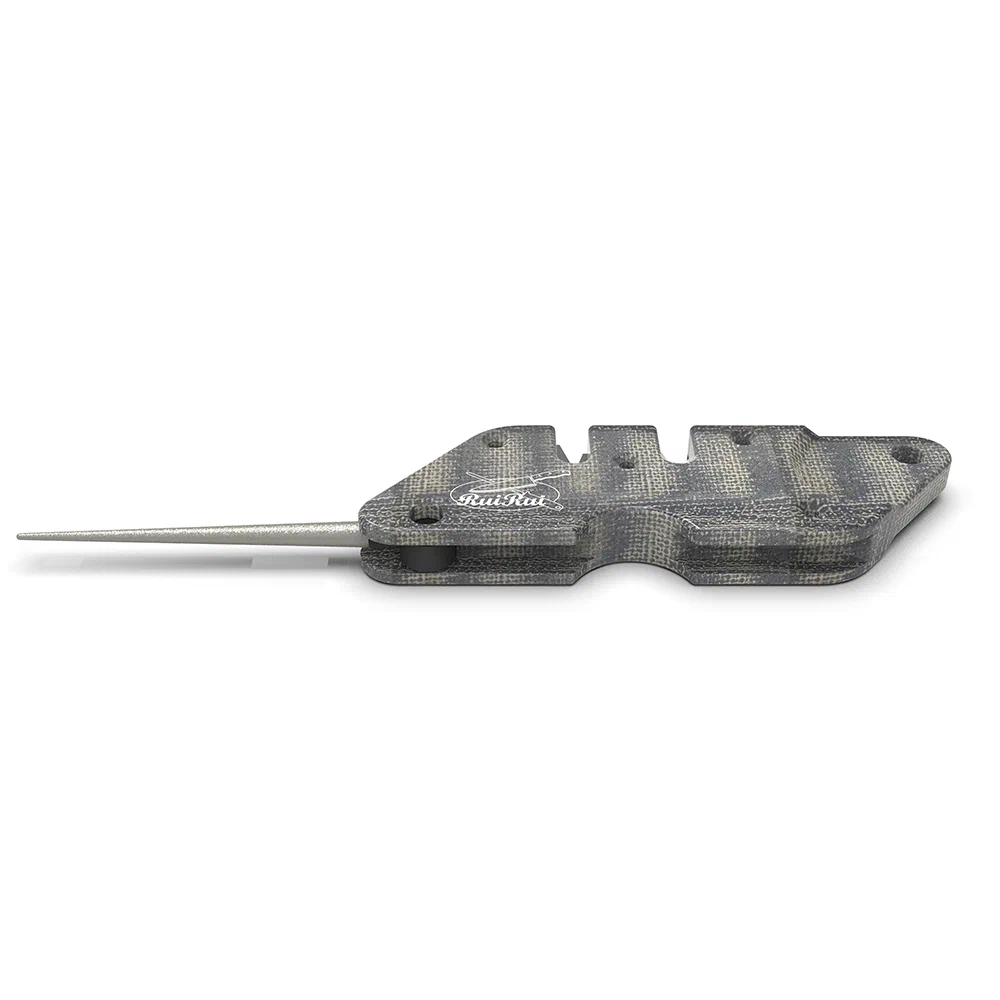
Send your customization brief — pattern file, packaging format, integrated features and target volume — to get a sampling schedule and factory quotation within two business days. Include your target retail channel so the quote reflects the right certification and packaging level from the start.